Secondhand September is an awareness campaign created by Oxfam in 2019 to encourage people to buy and donate secondhand clothing throughout September. But six years on, I think the conversation around secondhand has changed considerably.
What began as a campaign encouraging us to think differently about our consumption has become part of mainstream fashion culture. Secondhand is no longer simply about charity shops, saving money or making a more environmentally conscious choice. It has become a much more sophisticated way of shopping.
Secondhand Has Gone Mainstream
We have seen a real shift in the way pre-loved clothing is perceived. Celebrities including Sienna Miller and Anne Hathaway have openly embraced vintage and secondhand fashion, while stylists increasingly look to vintage and archive pieces for red-carpet dressing.
In 2024, I went to Oxfam’s Style for Change show during London Fashion Week, where every look on the catwalk was pre-loved. It was a brilliant demonstration of just how far secondhand fashion has moved from its old charity-shop stereotype, and it reflects a much bigger change in the way we think about luxury.

Luxury Is Being Redefined
The pre-loved market has changed the traditional barriers to accessing luxury. You no longer necessarily need to buy something new, directly from a luxury house, to own an exceptional piece from a particular designer. If access has become easier, then what makes something luxurious?
For me, increasingly, it is discernment, quality, craftsmanship, provenance, individuality and purpose. That is the same thinking I wrote about in Sustainable Luxury: Navigating the Grey.
A beautifully made vintage coat can contain far more craftsmanship than something produced today. An archive piece may be considerably more distinctive than the latest collection. And a garment that has already existed, been worn and retained its quality can sometimes be a far more interesting investment for your wardrobe than buying something simply because it is new.
This is why I don’t see secondhand as simply a sustainable alternative to buying new. It is another way of finding exceptional clothing. Buying pre-loved can extend the life of a garment and reduce the demand for new production, but it isn’t necessary to be motivated primarily by sustainability to appreciate what the secondhand market offers. You might be looking for a particular designer, an exceptional fabric, a piece from an earlier collection, something that is no longer available, or simply something with more character than you are finding on the high street.
The more sophisticated your wardrobe becomes, the more important your ability to recognise quality becomes too. That is where having an expert eye can make a real difference. There is a huge amount of secondhand clothing available now, but not all of it is worth buying. If you are trying to move away from disposable fabrics and poorly made clothing, you need to know what to look for: construction, fabric, condition, fit, provenance and whether a piece has the longevity and relevance to earn its place in your wardrobe. Anyone can buy something pre-loved. The skill is knowing what is worth buying. I wrote more on the practical side in 10 Tips for Shopping Luxury Secondhand.

The Secondhand September Challenge
The original Secondhand September challenge encourages people to shop only secondhand for 30 days or more throughout September, and to donate good-quality pre-loved clothing that someone else could enjoy. I think the spirit of the challenge is still incredibly relevant, but I have always believed that the principles should extend well beyond one month. For me, secondhand is not about replacing one form of shopping with another. It is about becoming more intentional about what comes into your wardrobe in the first place.
Shop Oxfam online at onlineshop.oxfam.org.uk, or find a local Oxfam shop or boutique via their shop finder.
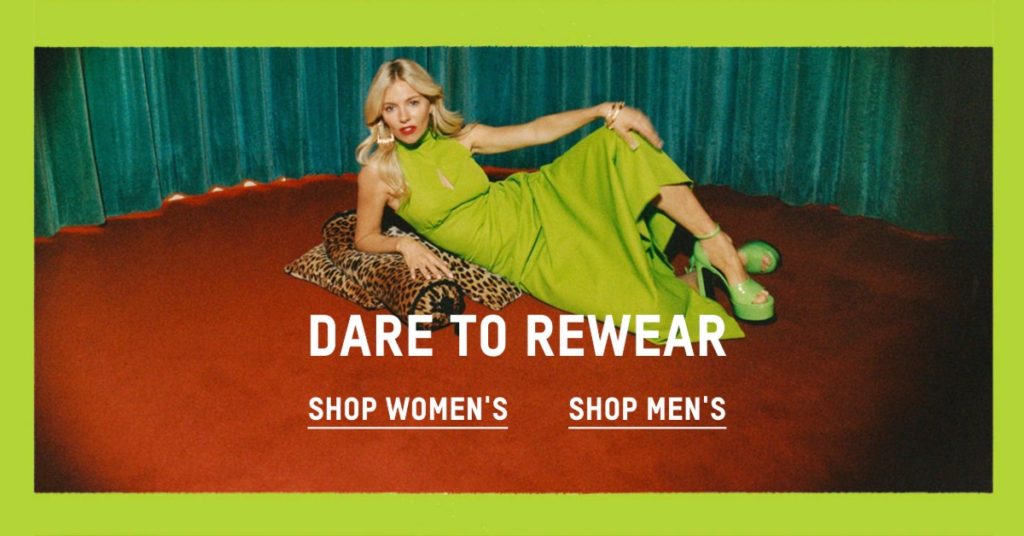
Dare to Rewear
For those of you who already know me, you’ll be familiar with my obsessive outfit repeating and my refusal to keep showing new outfit pictures on my Instagram. For those of you discovering me for the first time, I have been very proactive in showing that it is completely OK to keep re-wearing things. I just LOVE Oxfam’s idea of Dare to Rewear, because it normalises using clothes as they were intended: to be worn many times, not just a few.
Outfit Repeating
Re-wearing is such an important part of a more sustainable approach to fashion and reducing our overall clothing consumption. I am a BIG fan of re-wearing my favourite pieces. I have never felt shy about being seen in something more than once. If I love it, I wear it again, and again, on repeat. I’ve made no secret that outfit repeating has been a key part of my approach to sustainability for many years.
Style More and Shop Less
My own style is made up of pre-loved pieces sourced from charity shops, online auctions, clothes swaps, premium reseller platforms and independent ethical and sustainable brands.

But the point isn’t simply to shop secondhand. It is to style more and shop less. That means understanding what you already own, knowing what genuinely works for your life and style, and becoming much more discerning about what you choose to add. Secondhand can be a brilliant source of wardrobe investment pieces, but only when you are buying something because it is right, not simply because it is a bargain. Cost per wear is still a useful way to think about that.
And this is perhaps the biggest change I have seen in the secondhand conversation. It is no longer just about finding something cheap. It is about finding something worth having. Secondhand September may be a month-long campaign, but the principle is one I think we should carry with us throughout the year. Look for quality. Rewear what you love. Buy less, but buy better. And when you do buy pre-loved, don’t just ask yourself whether it is a good deal. Ask yourself whether it is aligned with who you are now, and your future wardrobe.
First published September 2021. Updated September 2026.