I explore whether the age-old saying “dressing for success” has any real merit. This phenomenon, also known as enclothed cognition, suggests that our clothing choices influence our psychological processes. By dressing with intention, we don’t just alter our appearance, we shift our mindset, our behaviour, and how we perform.
Have you ever noticed how slipping into the right outfit instantly changes your posture and your focus?
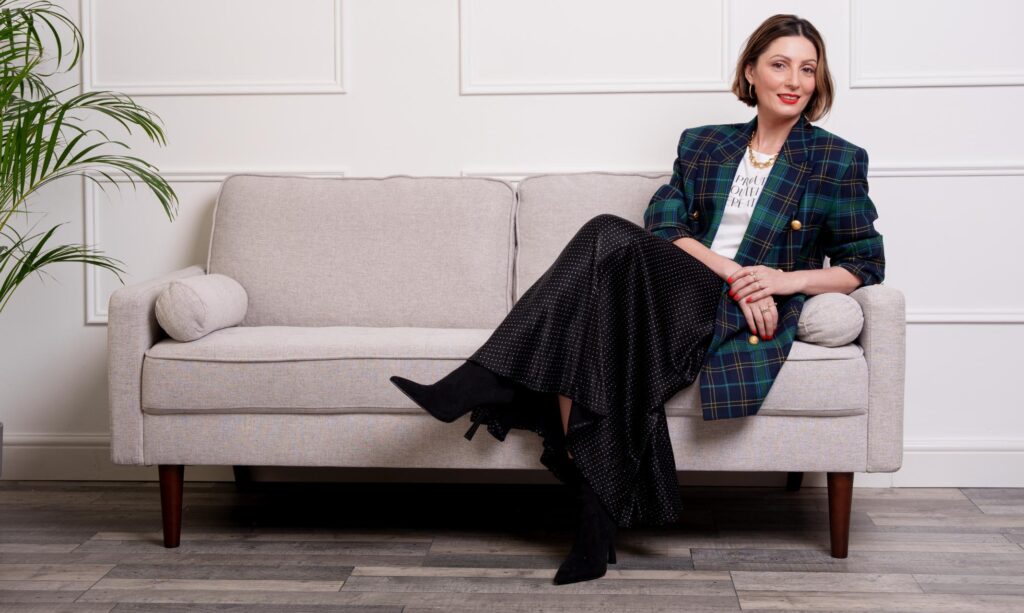
Understanding Enclothed Cognition
Enclothed cognition refers to the impact clothes have on the wearer’s psychological state. In a pivotal 2012 study, researchers Hajo Adam and Adam D. Galinsky found that participants wearing a lab coat, a garment associated with attentiveness and intelligence, performed better on attention-related tasks than those who didn’t. Dressing in attire linked to specific qualities can genuinely enhance our cognitive function.
Fashion commentator Caryn Franklin put it well: “My professional wardrobe of clothes, styled with my hair and makeup, helps me look the part and think like a fashion commentator. Enclothed cognition indeed.”
The Science Behind Dressing for Success
Research indicates that clothing choices can significantly affect performance and how others perceive us. A study published in Social Psychological and Personality Science found that people wearing formal business attire felt more powerful and showed enhanced abstract thinking, a key component of creativity and strategic decision-making. The University of Hertfordshire found that people perceived those dressed in tailored suits as more confident and competent than those in casual clothing.
Power Dressing: A Personal Journey
Reflecting on my own experience, I recall how transformative clothing can be. Early in my career, my petite stature and youthful appearance often led others to mistake me for a recent graduate, questioning my experience. To counter that, I embraced power dressing, well-fitted dresses, blazers, statement footwear became my staples. They helped me project authority and professionalism, but more importantly, they changed how I felt about myself. I stood taller, spoke with more confidence, and approached professional challenges with renewed assurance.
My background in performance art taught me the same lesson from a different angle: stepping into character through costume unlocks new energy and a different sense of self, something I’ve carried with me for over twenty years and into my styling work with clients, and something that keeps resurfacing every time a client is moving into a New Chapter of her own career.
Personal Branding and Personal Presence: Where the Line Sits
The two get used interchangeably, and they’re not quite the same thing. Personal branding is the story you’re telling deliberately, on LinkedIn, in a pitch, on stage. Personal presence is what people register before you’ve said anything at all, posture, tone, the coherence between how you look and how you actually are.
The best personal branding is honest about personal presence, not a performance layered on top of it. If your LinkedIn profile says one thing and the person who walks into the room communicates another, people notice the gap even when they can’t name it. That’s not a branding problem you can fix with better copy. It’s a presence problem, and it’s the exact gap a Personal Branding Photoshoot is built to close, making sure the version of you that’s photographed matches the version that walks into the room.
Why This Matters at Work
The stakes go up in professional settings, and they go up further in leadership. A leadership team walking into an investor meeting, a founder in front of a room of employees, a spokesperson on camera, all of it is communication before a word is spoken, and it reflects on the organisation as much as the individual.
I don’t think that’s incidental to strategy. It’s part of it. This is why Style with Substance runs as a corporate workshop as well as a private client service, presence and self-presentation affect how a team is read, and increasingly how an organisation’s values are read alongside its people.
Aligning Outer Style with Inner Values
The harmony between external appearance and internal identity is fundamental to real confidence. When that harmony breaks, when your wardrobe is still speaking for who you were rather than who you are now, it’s worth reading what I’ve written about the Style Identity Gap, because dressing for success is difficult to sustain on top of an unresolved version of that problem.
Curating a wardrobe that reflects your values and your goals isn’t about impressing anyone. It’s closer to a question I ask myself and my clients constantly now: what is this outfit actually communicating, before I’ve said a word?
Dressing for success looks different for different people and different chapters of life. Working out what it looks like for you, specifically, is where a stylist earns their place.
Practical Steps for Dressing for Success
- Embrace colour psychology. Colours evoke emotions and states of mind, red signals energy and authority, blue conveys calm and reliability. Choose colours that align with what you’re actually trying to communicate.
- Prioritise fit and comfort. Well-fitting clothing supports both appearance and confidence. A tailored blazer or properly fitted trousers make a real difference, and comfort matters just as much, it’s hard to project ease you don’t feel.
- Incorporate your values. Choose clothing that reflects the qualities you want to project. A leather jacket might read as boldness, a silk blouse as precision. These are small, visual signals of the traits you actually want people to notice.
- Invest in considered accessories. A well-made, thoughtfully sourced piece does more work than a logo. It changes the conversation from “where’s that from” to something with an actual story behind it.
- Dress for the occasion, on your own terms. A corporate meeting, a creative workshop, a casual lunch, each calls for something different, while staying recognisably you rather than a version of what you think the room expects.
The Link Between Clothing and Confidence
The connection between clothing and confidence is well documented. A meta-analysis of enclothed cognition studies found that wearing specific types of clothing consistently affects self-esteem and performance. A YouGov survey found that 62% of people feel more confident when wearing their favourite outfit, a small statistic, but a real one, about how much we actually register from what we’re wearing.
Colour is one of the fastest-acting parts of that equation, often registering before cut or fabric does. If you haven’t yet worked out which colours are actually doing this for you, a Colour Analysis Experience is the place that starts. I’ve also written more on what makes women confident, if you want to go deeper on the psychology side of this specifically.
Dressing With Intention Is a Genuine Strategy
The science behind enclothed cognition is clear: clothing isn’t a superficial concern, it’s a real lever on cognitive function, self-perception and performance. A wardrobe built with intention, around your actual values and goals, changes more than how a room sees you.
If you’d like to explore that for yourself, a Private Styling Consultation is where to start, a no-obligation discussion. If you’re exploring what this looks like for your organisation or your team, Style with Substance is where that conversation begins.

References
- Enclothed Cognition (2012). Adam, H., & Galinsky, A. D. Journal of Experimental Social Psychology, 48(4), 918-925. https://psycnet.apa.org/record/2012-06477-001
- The Cognitive Consequences of Formal Clothing (2015). Slepian, M. L., Ferber, S. N., Gold, J. M., & Rutchick, A. M. Social Psychological and Personality Science, 6(6), 661-668. https://www.columbia.edu/~ms4992/Publications/2015_Slepian-Ferber-Gold-Rutchick_Clothing-Formality_SPPS.pdf
- Dressing Up Posture: The Interactive Effects of Posture and Clothing on Competency Judgments (2016). Gurney, D. J., Howlett, N., Pine, K., Tracey, M., & Moggridge, R. British Journal of Psychology, 107(2), 435-451. https://pubmed.ncbi.nlm.nih.gov/27381170/
- Fashion Survey Results (2020). YouGov. https://docs.cdn.yougov.com/d74y5a141s/Fashion%20survey.pdf
- The Role of Clothing in Self-Perception (2018). The Psychology of Fashion. https://blogs.lse.ac.uk/lsereviewofbooks/2019/08/29/book-review-the-psychology-of-fashion-by-carolyn-mair/
- What You Wear Can Influence How You Perform (2012). MIT Sloan Management Review. https://sloanreview.mit.edu/article/what-you-wear-can-influence-how-you-perform/
- The Influence of Clothing on First Impressions (2013). Howlett, N., Pine, K., Orakçıoğlu, İ., & Fletcher, B. Journal of Fashion Marketing and Management, 17(1), 38-48. https://uhra.herts.ac.uk/bitstream/handle/2299/12766/906722.pdf?sequence=2
- What You Wear Can Change Your Brain (2014). University of Hertfordshire. https://news.cision.com/university-of-hertfordshire/r/what-you-wear-can-change-your-brain,c9593728
- Proximity of Clothing to Self Scale (2004). Sontag, M., & Lee, J. Clothing and Textiles Research Journal, 22(4), 161-177. https://doi.org/10.1177/0887302X0402200403
- Influence of Collective Self-Esteem on Fashion Clothing Involvement Among Indian Women (2012). Khare, A., & Rakesh, S. Journal of Fashion Marketing and Management, 16(1), 42-63. https://doi.org/10.1108/13612021211203016
- Fashion and Positive Psychology: Interactions Between Clothing, Mood, Self-Concept, and Well-Being (2023). Scott, J. Toronto Metropolitan University. https://rshare.library.torontomu.ca/articles/thesis/Fashion_And_Positive_Psychology_Interactions_Between_Clothing_Mood_Self-Concept_And_Well_Being/14649540