Legacy Content Notice
This article was originally published during an earlier stage of my business and reflects where my thinking, work and the fashion industry were at the time.
Over the last decade, my work has evolved from sustainable fashion activism and industry education into a broader focus on style, identity and sustainable luxury.
While some links, brands or references may no longer be current, I’ve chosen to keep this piece live because it remains part of the journey and may still offer useful context, ideas or inspiration.
For my latest thinking, explore my recent articles, services and resources.
I sat down with Haseena, co-founder of DfyNorm for interview back in 2016 in a hotel bar near Oxford Street to take an exclusive look at their brand. They were proud to make high-quality, considered clothing – pieces that honoured Indian textile heritage while translating it into modern silhouettes. The construction was exceptional.
DfYNorm had a clear point of view. They even had external validation – a Virgin Business Accelerator grant, which back then for an ‘ethical fashion brand’ was no small thing. They had founders who understood exactly why they were building what they were building. And they did all the right commercial things like buying a stand at Pure London to get stocked wholesale, Haseena the founder also took to the stage and did interviews, there were great edited online videos of them online – they genuinely cared about where their clothes came from and what those choices communicated. It was inspiring – its why I leapt at the chance to support them.
Not too many years later – DfyNorm closed anyway.
I think about that a lot. And how that inspired my work at Ethical Brand Directory and why despite being more aligned with products that sit at a higher, less mass market price point now, I will always support the smaller independent brands for everyday basics.
So Why Do Good Ethical & Sustainable Brands Fail?
There is a version of the sustainable fashion conversation that implies the problem is simple: if people just bought better, the right brands would survive. If consumers made more conscious choices, the economics would follow.
DfyNorm had a great collection of well made pieces. They had press attention, industry recognition, the kind of founding story that should have translated into loyalty. What it didn’t have was enough people buying pieces that actually kept the business afloat. I also think the challenge was that commercially not all their pieces worked for real wardrobes. I say this time and time again, but there is a reason why so many women shop at Zara and Cos – they produce commercially desirable pieces that a large percentage of shoppers are attracted to.
Today, I think there is another problem which is nothing to do with the brands per say. It’s about women and about them dressing for their real lives, the version of themselves they were actually living rather than the version they aspired to represent. And I can admit I accepted gifts and items from brands that weren’t really ‘me’ – but the brand story and what the piece represented was so powerful.
Because values-aligned shopping, when it functions as identity signalling rather than genuine discernment, does not actually sustain the brands it claims to support. It generates interest, attention, goodwill – and then the piece sits unworn in a wardrobe because the item was never quite right, or the occasion never came, or the woman who bought it was dressing for a version of herself that she might not want to admit, wasn’t really her.
My Review of the Dfynorm Pieces
Some of the DfyNorm pieces were extraordinary. The fabrics especially – structured, considered, with a weight and finish that you rarely find at that price point. The design was confident and specific, which is harder to achieve than it sounds. Many independent brands hedge their identity trying to appeal to a very specific niche or too broadly.
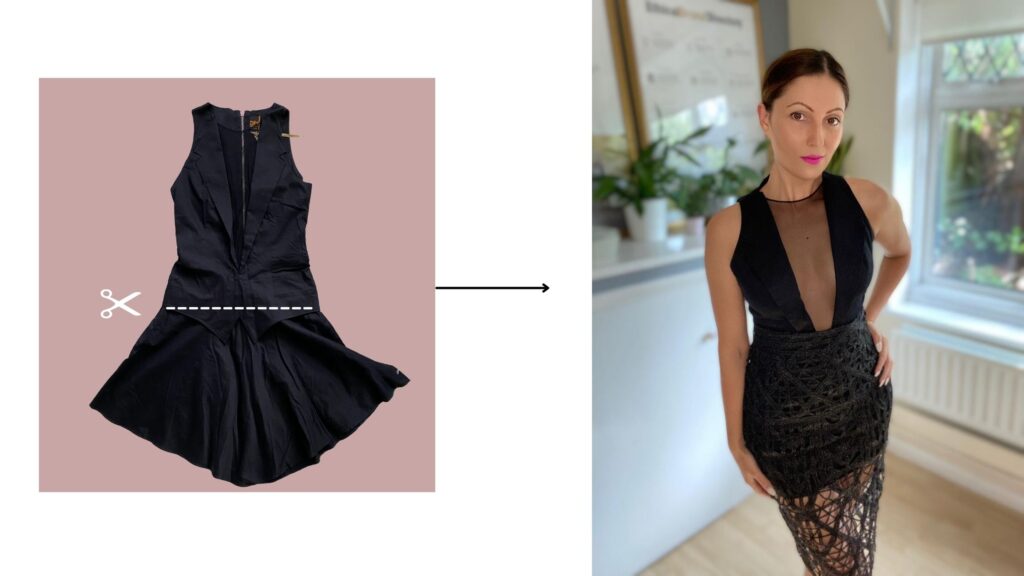
But not every piece worked for me personally. The tuxedo dress in particular – I genuinely admired in theory – but it was not right for my shape. The silhouette in particular, was cut in a way which didn’t enhance my shape – it thew my proportions off. However, I accepted the gift, thinking as a Sustainable Stylist, I should be photographed at an event wearing something from a brand with a powerful story. But it sat in my wardrobe doing nothing, for years.
Eventually I had it redesigned – cut down into a top, the skirt removed (and used to extend the length of another dress). The elegant yet daring tuxedo waistcoat part of the dress worked perfectly as a top. And I am pleased, because now it is truly one of a kind – and I still have a fantastic story to tell when I wear it.
A lesser-made garment would not have survived the redesign, because many garments today are simple not made to last. Seams are barely there and the fabric so flimsy, even a repair is difficult.
That transformation taught me something I’ve carried into every client conversation since: believing in a brand and buying pieces that work for you are not the same decision.
The Problem with Buying the Story Story
There is real psychological pressure in values-aligned shopping to love everything a brand produces. If you care about the ethics, the craft, the founders, the supply chain – it feels almost disloyal to admit that a particular piece doesn’t suit you, or that the cut isn’t right for your body, or that you are never actually going to wear it.
So women buy it anyway. Because the story is good. Because supporting it feels important. Because saying no to a brand you believe in requires a clarity about your own wardrobe that most women have never been given the tools to develop.
And then the piece sits there. Unworn. Which helps no one – not the woman, and not the brand whose survival depends on customers who actually wear what they are making. There is no better publicity for a brand than other women wearing their pieces – which goes a long way to explain why I used to compromise my own style for ‘the story’ when I first started my (unofficial role) as an ambassador for sustainable brands.
Clarity is knowing specifically what works for your body, your life and your identity. And very often, the ‘identity’ part is what gets missed in traditional styling guidance – this is exactly what the Style Synopsis is built around. Not a shopping list. Not a set of rules. A framework for understanding your own wardrobe well enough that when you encounter something worth buying, you know it with certainty.
One thing I have come to learn – performative values-aligned shopping is not conscious consumption. It is guilt management wearing a better label. And the same goes for ‘preloved shopping these days too’.
What Longevity Actually Looks Like
What stayed with me wasn’t that the dress became something else. It’s that the construction was good enough to survive it. DfyNorm still closed, but the dress lived on to tell a new story – and this is why brands like The Reclaimery as so important in helping give our clothes a second chance.
Longevity and investing in your style requires knowing what works for you specifically. Not what should work, not what works in theory, not what works for the aesthetic you are building toward in a far distant future. It’s about what works for your actual body, your actual life, your actual wardrobe as it currently exists – but can adapt when life changes (and it will).
Clarity gives you confidence about proportion, about colour, about the specific conditions under which you feel most like yourself. Without it, even the most considered shopping becomes guesswork.
And guesswork, however ethically sourced, or sustainably intended, still fills wardrobes with pieces that don’t get worn.
Why This story of Ethical brands closing down Still Matters
DfyNorm is not an isolated case. Independent brands with genuine potential, clear identity and considered production continue to close – while fast fashion scales. But one thread running through most of these closures is the gap between the audience that admires what a brand represents, too many brands focus on their story and not a deeper connection with who the woman aspires to be wearing – because being “sustainable” isn’t enough. People just don’t buy things because it’s sustainable, it has to meet their needs – and aspirations.
More women shopping with genuine discernment – understanding their own wardrobe well enough to know which pieces truly belong in it – would not solve the structural problems of the fashion industry. But it would change the nature of the demand – and if we want a better industry, we have to support those making the changes already.