Don’t judge a book by its cover. Look beyond beauty. It’s what’s on the inside that counts. We’ve heard all those lines before, haven’t we? They’ve been drummed into us by the time we reach puberty.
And yet, whether we like it or not, how we look matters. What we wear matters. Not because there is one right way to look, or because being conventionally attractive is somehow more valuable, but because appearance is part of how we experience other people and how other people experience us.
We form impressions quickly. Colour choice, clothing material and style, our grooming, posture and context all contribute to what people read from us before we’ve had the opportunity to explain ourselves. That matters professionally, socially and personally.
And what I am most interested in, and who I believe it matters to the most, is the person wearing the clothes – you. Whether we are aware or unaware our clothes are sending us signals about how we feel about ourself.
Why Personal Presence Matters
For years, I used the word flattering constantly, with clients and about myself, partly because that’s the language clients reached for, and partly because it’s what we’ve all been conditioned to believe matters most when we get dressed. At some point I stopped asking whether an outfit flattered my body and started asking a different question instead: What is this outfit communicating?
That isn’t about judging what people wear. It’s about recognising that communication starts before anyone has spoken a word. Personal presence is the combination of how you look, how you feel, how you behave and the context you’re in. It is what people register when you walk into a room, before you’ve had the chance to tell them who you are.
Research into clothing and person perception supports something we already experience intuitively: what we wear can influence how people make judgements about us, including perceptions around competence, credibility, identity and status.
That doesn’t mean we should become obsessed with managing other people’s perceptions. It means we should understand the part we are already playing.
What We Wear Affects Us Too
The conversation about appearance often stops with other people. People judge you by what you wear. But we don’t experience our clothes from the outside. We experience them on our bodies.
What we wear can influence how we feel, how comfortable we are, how much attention we give to ourselves and how we approach the situation we’re in. Research into clothing psychology suggests that what we wear can influence psychological processes and behaviour, although the relationship is more nuanced than the simple idea that one particular item of clothing automatically makes you more confident.
You know this yourself. There are clothes you put on and immediately feel more like yourself. There are others that make you feel uncomfortable, distracted or as though you’re playing a part. That difference matters.
If you’re constantly adjusting your clothes, wondering whether you look right or feeling that what you’re wearing doesn’t quite represent you, some of your attention is already being taken up by your appearance. When your clothes feel coherent with who you are and what you’re doing, there is less to manage. You can be present.
Colour Can Change How You Show Up
Colour is particularly interesting because we experience it both visually and psychologically. We all have colours that seem to give us energy, colours that make us feel more grounded and colours that we instinctively reach for when we want to feel a particular way.
That doesn’t mean that red automatically makes everyone powerful, or blue automatically makes everyone calm. Colour psychology isn’t that simple. Cultural associations, personal experience, context and the characteristics of the colour itself all influence how we respond. But colour does affect the way we experience an outfit and the way that outfit is perceived.
I’ve seen this repeatedly in colour analysis. A colour can change how someone sees themselves in the mirror. It can make them feel more awake, more visible, more energised or simply more like themselves. And that can change how they show up.
Colour also contributes to the atmosphere we create around us. A saturated colour can bring a very different energy to a room from a soft, muted palette. Neither is inherently better. The question is whether the choice supports what you are trying to communicate and how you want to feel.
This is why I don’t see colour analysis as simply finding the colours that “flatter” you. It’s about understanding colour well enough to use it deliberately.
I’ve written more about this in Colour Analysis: How Colour Supports Your Presence and Identity, where I explore the relationship between colour, energy, identity and how we want to show up.
Colour Clarity
Understand the colours that support your presence, identity and wardrobe.
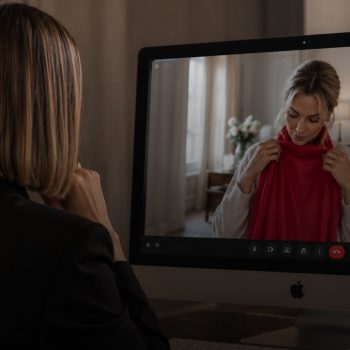
Colour Clarity is a 1:1 online colour analysis experience designed to help you understand which colours work for you, why they work, and how to use them with confidence rather than second-guessing. You don’t need a collection of professional drapes at home. We work with colours you already have in your wardrobe, so you can understand what actually works for you and how to use that knowledge in real life.
When You Want to Be Taken Seriously
This becomes particularly important when the stakes are higher. A leadership meeting. A presentation. An interview. A pitch. A networking event. A client meeting. A photograph that will represent you professionally.
We form impressions before someone has had the chance to demonstrate their expertise. Being taken seriously isn’t simply about wearing a suit, looking older or dressing more formally. It isn’t about becoming more corporate or suppressing your personality. It’s about making sure the visual information you’re giving people isn’t working against the person you actually are.
A highly capable woman whose clothes make her feel uncomfortable, invisible or disconnected from herself is dealing with a different problem from someone who simply needs a more professional wardrobe. Sometimes the issue isn’t that she needs to look more professional. She needs to feel more congruent.
When what you’re wearing reflects how you see yourself, supports the context you’re in and allows you to move through the situation without constantly thinking about your clothes, your presence becomes easier to inhabit. And that matters. I have written more about the professional side of clothing and perception in The Power of Clothing: Dressing for Success and Confidence.
Personal Presence Isn’t Personal Branding
These two things are often confused, but they’re not the same. Personal branding is deliberate. It’s the story you choose to tell through your website, LinkedIn profile, photography, presentations and other visible communication. Personal presence is what people register when you actually walk into the room.
The two should support each other, but personal presence isn’t something you can manufacture entirely through branding. If the woman in your photographs looks confident, considered and completely at ease, but the woman who walks into the room feels as though she is wearing a costume, there is a disconnect.
Style can’t manufacture confidence. But the right clothes can remove some of the friction between how you see yourself, how you want to be perceived and how you actually show up. That is a much more useful role for style.
The Details Still Matter
Attention to detail matters. But I don’t think that means we need a checklist telling women to brush their hair, clean their shoes and remove every trace of fluff before leaving the house. It is more useful to think about the overall impression.
- Does the outfit fit properly?
- Are you distracted by something that needs adjusting?
- Does the condition of what you’re wearing support the level of care you want to communicate?
- Are you wearing something because you chose it, or because you haven’t questioned the decision for years?
None of this is about perfection. It’s about removing unnecessary visual noise so that the person you are trying to communicate doesn’t get lost underneath it.
A Better Question
So perhaps the question was never simply: Does this flatter me? A better question might be: How do I want to feel, and what do I want my appearance to communicate?
- Does this feel like me?
- Does it support the situation I’m walking into?
- Does the colour give me the energy I need today?
- Does it help me feel visible, grounded, authoritative, creative or approachable?
- Does my wardrobe reflect who I am now, or am I still dressing from an earlier version of myself?
These are the questions that move personal style beyond appearance and into identity and personal presence. That is the work of a style audit. Because style isn’t simply what other people see. It is also part of how you experience yourself. And when those two things are working together, getting dressed becomes much less about trying to look right and much more about being ready to show up.
If you’re exploring a wider question around how you want to present yourself, a Private Styling Consultation is a good place to begin. We can look at where you are, what isn’t working and whether the right next step is colour, Style Discovery or deeper wardrobe work.
First published September 2019. Updated September 2026.